NAS Security Vulnerability
The Hidden Vulnerability in Your Storage: What the Infamous Crypto-Hijacking Incident Teaches Us About NAS Security
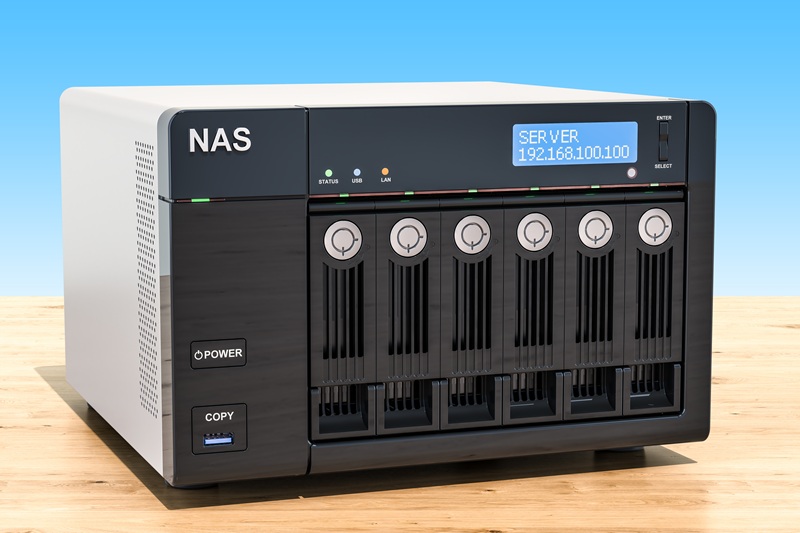
Network Attached Storage (NAS) devices are the operational backbone of modern enterprises. They hold our most vital shared assets—from critical financial worksheets to sensitive application backups. Because many core NAS operating systems run on a Linux-based kernel, there is a widespread, dangerous industry myth that these systems are inherently safe from cyberthreats. [1, 2, 3, 4]
History tells a very different story.
One of the most eye-opening examples of data infrastructure exploitation occurred in June 2014, when a mass security vulnerability exposed thousands of internet-accessible NAS units. Instead of stealing files, hackers leveraged unpatched admin privileges to construct a massive, automated Dogecoin and Bitcoin mining operation. Unsuspecting companies only realized they had been compromised when their network storage units ground to a halt, completely overwhelmed by unauthorized cryptomining scripts. [1, 2, 3, 4, 5]
That single incident netted the threat actor over $620,000 at the time—proving that if your data endpoints are exposed to the open internet without continuous oversight, they will be exploited. [1, 2]
________________________________________
The Reality of Modern NAS Vulnerabilities
Though the tools have evolved from basic cryptocurrency miners to sophisticated ransomware payloads, the primary attack vectors remain exactly the same:
• Public Internet Exposure: Connecting a NAS directly to the open internet without an encryption perimeter makes it a visible target for automated network port scanners. [1, 2]
• The Patching Gap: Hardware vendors regularly publish critical security patches. However, internal IT teams often overlook storage firmware updates, leaving old code flaws open for years. [1, 2]
• Default Credentials: Many legacy firmware installations ship with generic administrative profiles that brute-force tools can bypass in seconds. [1, 2]
________________________________________
4 Pillars to Bulletproof Your Local Data Storage
To ensure your storage infrastructure stays protected and resilient, the P-Tech core infrastructure team implements four best-practice defense layers:
1. Enforce Strict VPN Access Only
Never expose your NAS interface directly to a public IP address. Secure external remote access must be funneled exclusively through a verified Virtual Private Network (VPN) or dedicated secure boundary protocol. [1]
2. Disable Unused Protocols & Port-Forwarding
Turn off legacy, unencrypted transfer protocols like standard FTP or Telnet. Restrict access strictly to secure channels like HTTPS and SFTP, and ensure all unused communication ports are locked down tightly. [1]
3. Automate Vulnerability & Advisory Patching
Do not wait for a system failure to check for software updates. Establish a routine verification cycle to deploy security advisories directly from your respective vendor ecosystem (such as Synology, QNAP, or specialized enterprise storage arrays). [1, 2, 3]
4. Implement Immutable Data Backups
In the event that an endpoint is compromised, your business continuity depends on an untamperable baseline. Pair your active NAS clusters with a secondary immutable backup system to guarantee quick recovery without paying a ransom.
Partner with P-Tech for Proactive Storage Management
Securing enterprise networks involves continuous vigilance, systematic firmware lifecycle management, and clear technical oversight. [1]
At P-Tech People and Technology Inc., our managed infrastructure services provide your organization with dedicated Systems and Network Administrators who proactively manage endpoint security configurations, isolate vulnerabilities, and enforce ITIL-aligned protection frameworks.
👉 Don’t let your data arrays become an open backdoor. Reach out to the P-Tech team today to schedule a comprehensive assessment of your network-attached storage environments.