Demystified IT Security Policy
Demystifying IT Security Policy: 12 Realities Every Business Needs to Know
In an era of sophisticated ransomware, automated phishing, and strict data privacy laws, cybersecurity cannot operate on assumptions. Yet, many organizations still treat an IT Security Policy as an obscure, optional rulebook reserved only for multinational conglomerates.
To build a secure and resilient organization, leadership must understand what an IT security framework actually entails. Here are 12 essential realities demystifying the modern IT Security Policy:
________________________________________
1. It is a Critical Pillar of Overall IT Governance
An IT Security Policy is not an isolated directive; it functions as a specialized subset of your broader IT Policies and Procedures. While standard IT policies govern operational workflows (like hardware requests or software deployment), your security policy defines access boundaries, defense mechanisms, and data protection standards.
2. SMEs Need It Just as Much as Enterprises
Many Small and Medium Enterprises (SMEs) mistakenly believe they are too small to be targeted by cybercriminals. In reality, attackers frequently target SMEs precisely because they lack formal security controls, using them as stepping stones to breach larger supply-chain partners.
3. Distributed Networks Demand Formal Rules
While historically seen only in global enterprises with multi-branch offices, distributed operations are now the baseline for everyone. With hybrid schedules and remote workforces accessing corporate networks from home, a standardized security baseline is vital to eliminate visibility blind spots.
4. A Growing IT Footprint Requires Clear Mandates
If your organization maintains dedicated IT personnel or an expanding technical team, formal documentation is non-negotiable. An established policy provides your engineers with clear legal and operational authority to enforce security measures, configure firewalls, and restrict unauthorized software.
5. A Comprehensive Policy Goes Beyond a Quick Checklist
A thorough IT Security Policy cannot be condensed into a generic 1- to 3-page memo. It must provide detailed operational standards covering multiple disciplines, including password hygiene, access control, endpoint encryption, incident response escalation, and acceptable asset usage.
6. Cross-Departmental Collaboration is Mandatory (Especially with HR)
Information security is not merely an IT problem—it is an organizational responsibility. Your Human Resources department plays a pivotal role in aligning the security policy with employment contracts, onboarding procedures, disciplinary actions for security violations, and clean exit protocols during employee offboarding.
7. It Structures Daily Business Operations
Implementing a structured security framework establishes clear guidelines for how corporate data is classified, stored, transmitted, and destroyed. This consistency ensures operational efficiency while significantly mitigating the risk of accidental internal data leaks.
8. Policies Require Continuous Employee Education
A security policy filed away in an unread digital folder offers zero protection. Organizations must actively educate staff through regular security awareness sessions, explaining why specific rules exist and training employees to identify modern social engineering tactics.
9. It is a Dynamic, Living Document
Cybersecurity is not static. An effective security policy is a living document that must be reviewed and updated regularly to address emerging attack vectors, new cloud adoptions, organizational restructurings, and shifting regulatory mandates.
10. Clear Ownership Drives Accountability
A policy only succeeds when executive ownership is established. Whether overseen by an internal IT Director, a dedicated Information Security Officer, or a specialized Virtual CISO (vCISO), there must be designated leadership accountable for monitoring compliance and driving enforcement.
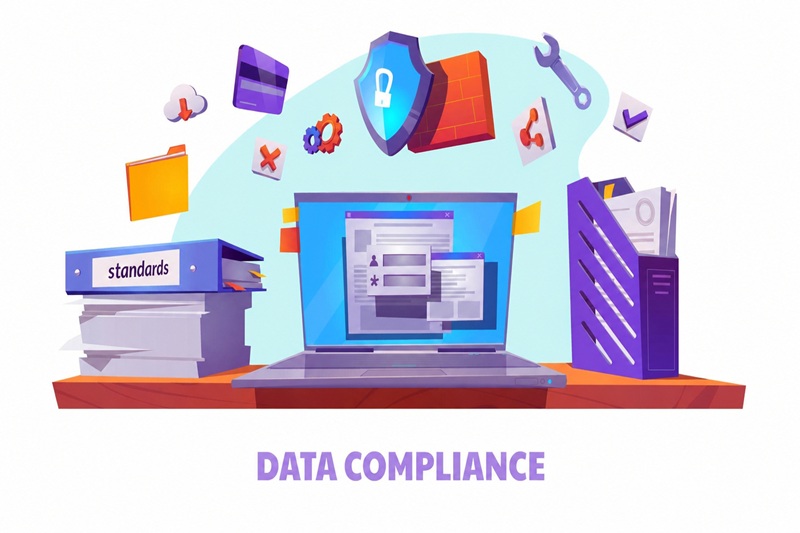
11. Alignment with Recognized Industry Frameworks is Essential
Your security standards should not be drafted in a vacuum. Effective policies map directly to established international baselines—such as ISO/IEC 27001, NIST Cybersecurity Framework, and local legal requirements like the Philippine Data Privacy Act of 2012 (RA 10173).
12. Security Governance Demands Executive Commitment
Treating your IT Security Policy as a mere bureaucratic checkbox exposes your business to catastrophic operational downtime, reputational ruin, and severe regulatory fines. Security governance must be embraced at the executive and board level as an essential pillar of business continuity.
________________________________________
Strengthen Your Security Posture with P-Tech
Drafting, implementing, and enforcing an audit-ready IT Security Policy requires practical technical insight and seasoned governance experience.
At P-Tech People and Technology Inc., our certified IT consultants and systems architects help organizations design robust cybersecurity governance models:
• Policy Audit & Framework Alignment: We review your current workflows and author comprehensive security policies mapped to ISO standards and Philippine regulatory baselines.
• Proactive Security Management: As part of our specialized Managed IT Services, we provide 24/7 monitoring, automated endpoint hardening, and vulnerability mitigation to enforce your policies around the clock.
• Employee Security Awareness: We help train your workforce on threat identification and secure digital hygiene, turning your employees into your strongest defensive layer.
👉 Contact the P-Tech Advisory Team today to schedule an IT security consultation and safeguard your corporate infrastructure.